
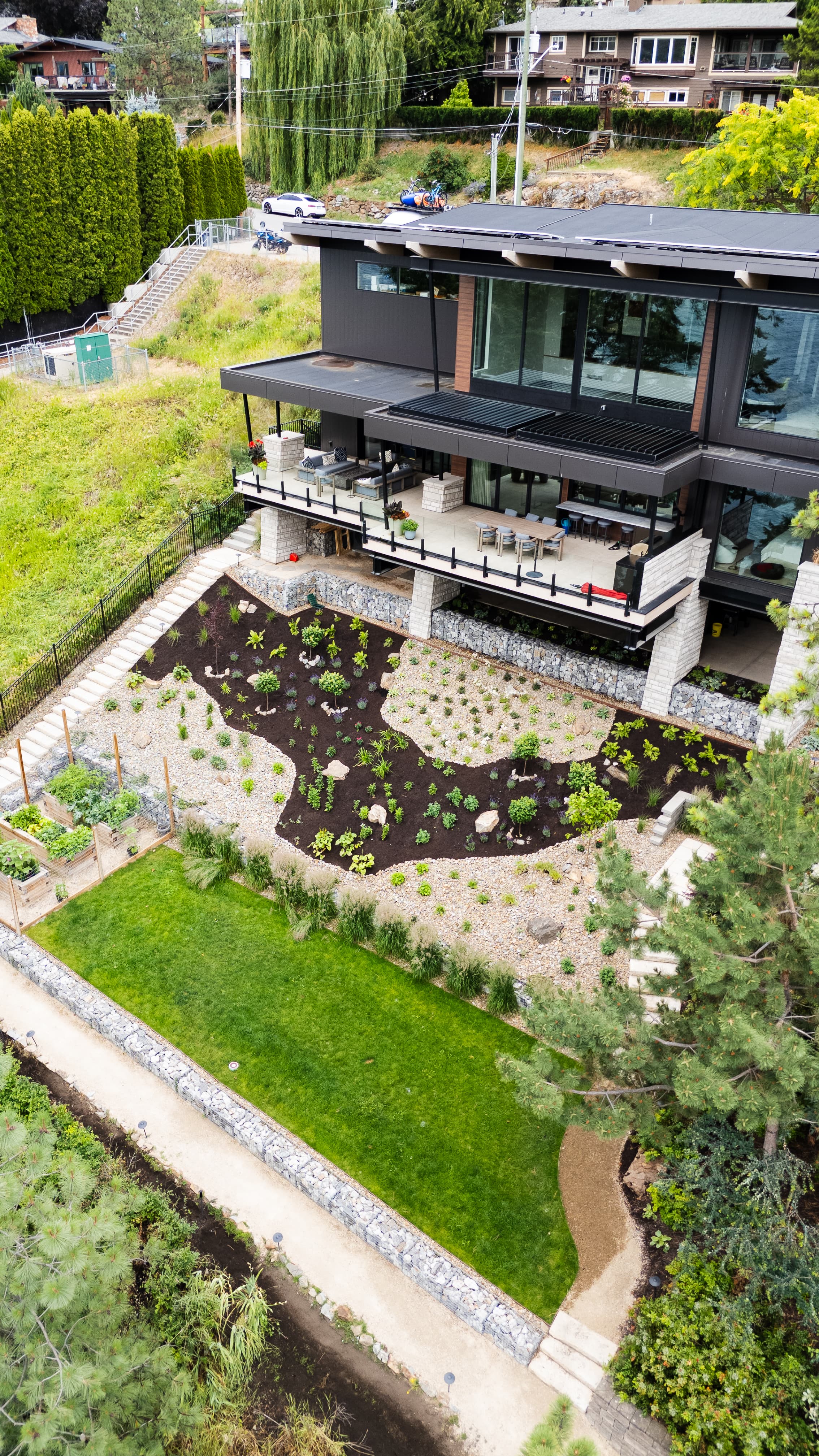
How to Build a Low-Water Landscape in Kelowna: A Guide to Xeriscaping
If you live in Kelowna, West Kelowna, Lake Country, or anywhere in the Okanagan Valley, you know how quickly summer can change your landscape. Long, hot, dry summers, limited rainfall, water restrictions, and intense sun put real stress on a yard.
Homeowners want their landscapes to feel full, colourful, and beautiful, without spending the whole summer worrying about water use. The good news: a low-water landscape doesn't have to mean a yard full of rocks, sparse planting, or muted colours. With the right plant selection, irrigation, soil preparation, and design, you can create a landscape that's colourful, functional, and suited to the Okanagan climate.
What Is Xeriscaping?
Xeriscaping is a landscaping approach focused on water conservation. It uses water-efficient plants and techniques to create a landscape that requires less water once established.
The City of Kelowna recognizes xeriscaping as a water-efficient landscaping method, recommending climate-appropriate plants, hydrozoning, quality growing medium, mulch, and reduced turf as core strategies for water-efficient yards. Xeriscaping doesn't mean eliminating plants or creating a landscape that looks dry and empty — a well-designed xeriscape still delivers colour, texture, and seasonal interest.
What Does a Low-Water Landscape Actually Mean?
A low-water landscape isn't one that never needs water. It's a landscape designed to use water efficiently, built from plants and systems suited to the conditions they're growing in.
Every property is different. Some areas get full sun all day; others are shaded by the house or mature trees. Some are exposed to wind, others protected. Sloped properties have different watering needs than flat ones. A successful low-water landscape accounts for these conditions from the start, which typically includes:
Selecting plants suited to the Okanagan climate
Grouping plants with similar water requirements
Installing efficient, zoned irrigation
Improving soil conditions
Using mulch to retain moisture
Designing around sun and shade
Reducing unnecessary turf
Low-Water Doesn't Mean Low-Colour: Plants That Thrive in Kelowna
The biggest misconception we hear is that a water-conscious landscape has to look bare or boring. It doesn't — you just need the right plants in the right spots. Some proven performers for Kelowna's hot, dry summers include:
Russian sage — silvery foliage and lavender-blue blooms through late summer
Lavender — classic drought-tolerant colour and fragrance, thrives in full sun
Sedum (stonecrop) — succulent foliage with late-season flower clusters, extremely low-maintenance
Saskatoon (serviceberry) — a native shrub with spring blooms, summer berries, and fall colour
Ornamental grasses (blue fescue, feather reed grass) — movement and texture year-round
Yarrow — long-blooming, tolerant of poor soil and heat
Creeping juniper — a low, spreading ground cover that's excellent on slopes and fully drought-tolerant once established
Potentilla — a hardy flowering shrub that blooms most of the summer
Black-eyed Susan — bright, long-blooming colour that needs very little water once rooted in
Combining perennials for seasonal colour, shrubs and grasses for structure, and flowering trees for larger bursts of interest keeps a landscape looking good from spring through fall — not just for two weeks a year.
Choosing the Right Plants for Kelowna
Not every plant that looks good at a garden centre performs well on a hot, exposed Kelowna property. When selecting plants, we consider sun exposure, soil conditions, water needs, mature size, bloom time, wind exposure, winter hardiness, and maintenance requirements.
We also group plants by shared water needs — a practice called hydrozoning — so the irrigation system can be designed around them rather than watering everything the same way.
What Is Hydrozoning?
Hydrozoning means grouping plants together based on how much water they need. Drought-tolerant plants go on one irrigation zone; plants needing more consistent moisture go on another. This prevents the whole landscape from being watered to satisfy the thirstiest plants — especially important in Kelowna, where growing conditions can vary dramatically across a single property.
Irrigation Still Matters
Even drought-tolerant plants need water while establishing, and most landscapes still need irrigation through peak summer. The difference is how that water is delivered.
Traditional sprinklers work well for even coverage across turf. Planting beds are usually better served by drip irrigation, which delivers water directly to the soil around each plant and cuts down on overspray and waste. A properly designed system separates lawns, planting beds, and trees into different zones so each area gets exactly what it needs.
Don't Forget the Soil
Plant choices and irrigation can only do so much if the soil isn't prepared properly. Healthy soil helps plants build strong root systems and improves how water moves through the landscape. Depending on existing conditions, soil prep may include removing unsuitable soil, adding quality growing medium, amending existing soil, correcting grading, and improving drainage.
Mulch Makes a Real Difference
A properly installed layer of mulch reduces evaporation, moderates soil temperature, and suppresses weeds — while giving beds a more finished look. Options include wood mulch, bark products, or decorative rock, depending on the plants and overall design.
Reducing Turf Without Losing Usable Space
Lawn is still important for many homeowners — for kids, pets, or entertaining — and we don't believe every xeriscape needs to eliminate it. The goal is using turf where it adds real value, not just because there's open space. Unused lawn areas can become planting beds, decorative rock, pathways, or patios, cutting irrigation needs while adding visual interest.
Designing for Sun and Shade
A plant that thrives in full afternoon sun may struggle in a shaded, damp bed, and vice versa. Rather than forcing plants into locations where they'll struggle, we match plants to the conditions already present on the property — a decision that has an outsized effect on long-term landscape performance.
Colour Comes From More Than Flowers
Flowers matter, but they're not the only source of visual interest. Foliage colour and texture, bark, ornamental grasses, fall colour, and evergreen structure all contribute to a landscape that looks good in every season — not just during a short bloom window.
Common Mistakes We See in Low-Water Landscapes
A low-water landscape isn't as simple as picking drought-tolerant plants off a list. Common mistakes include:
Choosing plants based on looks alone, without matching them to site conditions
Mixing plants with very different water requirements in the same zone
Poor soil preparation
Installing more turf than the property actually needs
Ignoring drainage and grading
Not leaving enough room for plants to reach mature size
Even a landscape full of "drought-tolerant" plants can waste water if the overall system isn't designed properly.
Why Local Experience Matters
What works in a cooler, wetter part of British Columbia won't necessarily work on an exposed hillside in Kelowna. Since 2004, Empire Landscaping has built landscapes throughout Kelowna and the Okanagan Valley, working with the realities of our climate — hot summers, water restrictions, sloped properties, and the region's varied microclimates.
Planning a Low-Water or Xeriscape Landscape in Kelowna?
Creating a water-conscious landscape doesn't mean sacrificing the look you want. With the right combination of plant material, irrigation, soil preparation, and design, you can have a landscape that's colourful, functional, and built for the Okanagan climate.
Ready to start planning your Kelowna landscape? Contact Empire Landscaping today to discuss your project and book a consultation.