
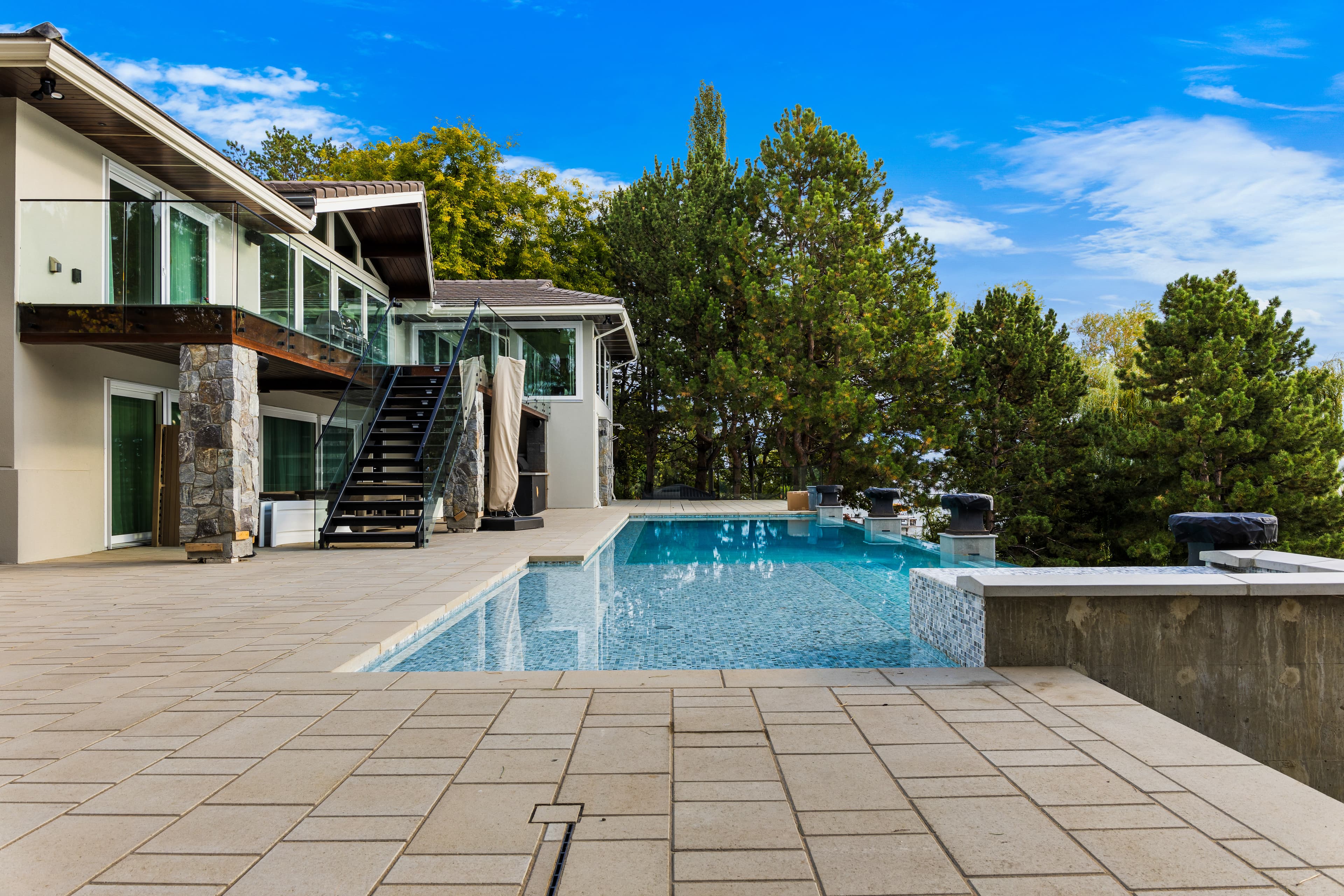
If you live in Kelowna or anywhere in the Okanagan Valley, you know that water can be unpredictable. We experience long, dry summers, but when heavy rain arrives or snow begins to melt, drainage can quickly become a problem around your property.
Poor landscape drainage can lead to standing water, soggy lawns, eroded planting beds, shifting pavers, and water collecting near your home's foundation. Even a beautifully designed landscape can develop problems over time if water isn't directed and managed properly.
The good news is that many drainage issues can be prevented with proper grading, thoughtful landscape design, and the right drainage solutions for your property.
Why is Landscape Drainage Important in Kelowna?
The Okanagan's climate creates unique drainage challenges throughout the year.
During summer, the ground can become very dry, particularly on exposed hillsides and properties with sandy or rocky soils. When rainfall arrives, water may run across the surface rather than soak in evenly. Spring snowmelt can also send water down slopes toward homes, patios, and retaining walls. We see this often on hillside properties in Upper Mission, Wilden, Black Mountain and West Kelowna, where runoff from the slope above heads straight for the house.
Soil conditions, changes in elevation, retaining walls, and hard surfaces all influence how water moves across a property. A successful landscape drainage plan considers these factors before construction begins, helping protect your home and the long-term performance of your landscape.
Signs Your Kelowna Yard Has a Drainage Problem
Drainage problems may only become noticeable after heavy rainfall, spring snowmelt, or changes in the landscape over time.
Common signs include:
Standing water that remains long after rainfall
Water pooling near your home's foundation
Soggy or consistently wet areas of lawn
Soil erosion or washed-out planting beds
Pavers that settle, shift, or become uneven
Water flowing toward patios, walkways, or outdoor living areas
Mulch, gravel, or soil washing away during heavy rain
Water collecting behind retaining walls
These issues can have different causes. Identifying where the water comes from and where it needs to go is the first step toward choosing an effective solution.
Start With Proper Landscape Grading
Proper grading is one of the most important parts of landscape drainage. It determines the shape and slope of the ground, controlling how surface water moves across your property.
Finished grades should direct water away from the home and toward an appropriate drainage area rather than allowing it to collect beside the foundation.
This is especially important when installing new lawns, planting beds, patios, walkways, and retaining walls. Depending on the existing elevations, small adjustments may be sufficient, while other properties require more extensive grading to establish effective drainage patterns.
Grading must also account for neighbouring properties. Water shouldn't simply be redirected from one problem area into another or onto a neighbour's property.
The goal is to create a landscape where water moves safely and predictably without causing pooling, erosion, or damage.
Managing Water Around Your Home's Foundation
Water repeatedly collecting beside your home's foundation should be taken seriously. Excess moisture can contribute to soil erosion, settlement around the home, and water entering below-grade spaces.
Several measures can help reduce these risks:
Maintain positive grading away from the foundation.
Direct downspouts into an appropriate drainage area.
Avoid creating low spots beside the house when installing planting beds or walkways.
Ensure patios and other hard surfaces slope away from the home.
Address areas where water repeatedly collects after rainfall.
It's important to distinguish between surface drainage and foundation drainage. Proper landscape grading can help manage surface water, but it won't repair a failed foundation drainage system. If water is entering a basement or crawlspace, or persistent foundation moisture is present, consult a qualified drainage professional or foundation specialist.
Downspouts and Roof Drainage
Your roof collects a significant amount of water during rainfall, and that water needs somewhere to go.
When downspouts discharge directly beside the house, runoff can saturate the soil near the foundation or erode nearby planting beds. Incorporating downspout drainage into your overall landscape plan can help manage this water more effectively.
Where appropriate, downspouts can connect to an underground drainage system that directs water to a suitable discharge location. Depending on the property, soil conditions, and local requirements, this may involve a properly designed drain pit or an approved stormwater connection.
A drain pit can allow roof runoff to disperse into the surrounding ground when the soil and site conditions are suitable. Where infiltration is limited, another approved drainage method may be necessary.
The right solution depends on the property's grading, soil conditions, available drainage infrastructure, and local requirements. Any system must have sufficient capacity and direct water to an appropriate outlet without creating problems for neighbouring properties.
Planning downspout drainage early helps integrate it with the finished grading and reduces the risk of water collecting around the foundation.
French Drains in Kelowna: When Do You Need One?
A French drain is a drainage system designed to collect and redirect water from areas where it tends to accumulate. It typically consists of perforated drainage pipe surrounded by drainage rock, with filter fabric used where appropriate to help limit soil and sediment entering the system.
Depending on the design, a French drain can help manage subsurface water along a slope, beside a patio, or in another area where water needs to be collected and redirected.
However, a French drain isn't the right solution for every drainage problem. If poor surface grading is the main issue, installing a subsurface drain without correcting the grading may not solve the underlying problem. The system also needs a suitable outlet.
Before installing a French drain, it's important to understand where the water is coming from, how much water needs to be managed, and where it can safely discharge. In some cases, regrading or a shallow drainage swale may be a simpler and more effective solution.
Drainage Around Patios, Pavers, and Outdoor Living Areas
Patios, driveways, and walkways change how water moves across a property. Because these hard surfaces absorb little rainfall, their slopes and surrounding elevations need to be planned carefully.
When installing pavers, we consider finished elevations, surface slopes, base preparation, and where water will travel once it leaves the paved area. Even correctly installed pavers can experience drainage problems if water collects along the edges or flows toward the house.
Depending on the design, drainage solutions may include:
Adjusting the finished grades around the patio
Incorporating drainage swales into nearby landscape areas
Installing channel drains or surface drains where appropriate
Providing a suitable outlet for collected water
Coordinating patio elevations with steps, retaining walls, and door thresholds
Pool patios and other areas exposed to frequent water require particular attention. Drainage planning should account for surface runoff, the underlying base, and water management around the pool structure.
The goal is to prevent water from collecting beneath or around finished surfaces, helping protect the installation and surrounding landscape.
Retaining Wall Drainage in the Okanagan
Retaining walls require careful drainage planning because water pressure can build up when soil becomes saturated behind the structure. Depending on the wall design and site conditions, inadequate drainage can contribute to movement, damage, or premature failure.
Proper retaining wall construction often includes drainage rock and perforated drainage pipe behind the wall, along with filter fabric where required. These components help collect and redirect water before it builds up behind the structure.
Drainage requirements depend on the wall's height, construction method, surrounding soil, groundwater conditions, and engineering requirements. Surface water must also be managed so runoff from higher areas doesn't continually flow behind the wall.
When a suitable drainage outlet isn't available, weep holes through the retaining wall may be an appropriate solution to allow trapped water to escape and help relieve hydrostatic pressure. Their placement and design must suit the wall construction and site conditions, as weep holes aren't appropriate for every situation.
For properties with significant elevation changes, retaining wall design and landscape drainage should be planned together from the beginning. Addressing drainage after construction can be more difficult and expensive than incorporating it into the original design.
How Soil Conditions Affect Landscape Drainage
Not all soils handle water in the same way. Some allow water to drain relatively quickly, while others retain moisture or have limited infiltration capacity. Rocky ground and shallow bedrock can also affect how water moves through a property.
In the Okanagan, soil conditions can vary significantly between neighbourhoods and even across a single property. Understanding the existing soil is important when planning lawns, planting beds, drainage systems, and other landscape features.
Improving the growing medium in planting beds can help plants establish, but adding soil or gravel alone won't necessarily solve a drainage problem. If water has nowhere to go, the underlying issue still needs to be addressed.
The right solution starts with understanding the site rather than simply adding material to the problem area.
Can You Have Good Drainage Without Sacrificing the Design?
Absolutely. Drainage doesn't need to be an obvious or unattractive part of your landscape. When planned properly, it can be integrated into the overall design while maintaining a clean, cohesive appearance.
Drainage swales can be shaped into lawn areas or planting beds, while surface drains can be positioned discreetly along patios and walkways. Retaining walls, steps, and grade changes can also be designed to work with the natural flow of water.
Planting can be incorporated into areas that receive more moisture, provided the plants are suited to the conditions and the drainage system functions properly.
Considering drainage during the design stage helps reduce unnecessary rework and creates an outdoor space that looks great while functioning properly over the long term.
Common Landscape Drainage Mistakes
Many drainage problems can be avoided by addressing a few common issues during planning and construction:
Ignoring finished elevations: Patios and planting beds can create drainage issues if surrounding grades aren't coordinated.
Directing water toward the house: Downspouts and sloped landscape areas should not concentrate water beside the foundation.
Installing drains without an outlet: Every drainage system needs an appropriate place to discharge collected water.
Assuming gravel fixes everything: Drainage rock won't solve every issue caused by poor grading or inadequate drainage capacity.
Overlooking retaining wall drainage: Water management behind walls is essential to a properly designed wall system.
Ignoring neighbouring properties: Drainage solutions must manage water responsibly without creating problems elsewhere.
Leaving drainage until the end: Retrofitting a system can mean removing finished landscaping, pavers, or other features.
Planning these details properly can help prevent costly repairs and protect your investment.
Designing a Landscape That Works with the Okanagan
A successful landscape needs to look good beyond installation day. In Kelowna and throughout the Okanagan Valley, that means planning for summer irrigation, heavy rainfall, spring snowmelt, changing soil conditions, and the elevation changes found on many local properties.
At Empire Landscaping, we've been building landscapes throughout Kelowna and the Okanagan Valley since 2004. We understand the importance of grading, drainage, and proper site preparation to the long-term performance of a landscape.
Whether we're installing a new patio, building retaining walls, renovating planting beds, or completing a full landscape construction project, we consider how the property functions as a whole.
Our goal is to create outdoor spaces that look great, function properly, and are built to last.
Planning a Landscape or Dealing with Drainage Problems in Kelowna?
Water problems around your home can be frustrating, especially when they affect your lawn, patio, retaining walls, or foundation. The right solution starts with understanding the property, identifying where the water is coming from, and determining how it can be managed safely and effectively.
Fall is the ideal time to fix drainage issues, before winter freeze-thaw and spring snowmelt put your yard to the test. If you're planning a new landscape or looking to address drainage issues in your existing yard, the team at Empire Landscaping can help assess the site and determine an approach suited to your property.